The Thélyson Orélien affair raises an important question: who is allowed to tell stories? Is it only those with enough socio-cultural capital to write books (or to have them written for them in an acceptable way)?
What of people with compelling stories who are less able to master grammar or to pay ghost-writers?
Is the scandal about the democratization of story-telling?
In the case of Orélien, it has been decided (by literary opinion-makers egged on by an anti-woke activist) that a refugee from Haiti cannot tell a story of refugees from Haiti… or rather, he is only authorized to tell the story if able to single-handedly write a book without outside help. Grammatical and linguistic gate-keeping?
Oérlien’s voice has effectively been silenced because his book was written with the help of AI. Yet, no one seriously believes that AI wrote his book – despite claims by the AI priesthood, the technology is nowhere near able to do so. At best it can flesh out good prompts and polish existing text.
Of course, thrust into the limelight and unused to it, Orélien has not helped himself. He has not explained how he used AI (though enough evidence that he did now exists for his publisher, Boréal, so far supportive of him, to drop him). In addition, there is considerable evidence that he has been happy to plagiarize texts in the past – he is not a publishing innocent.
Many writers don’t (fully) write their books
But if only innocents could author books then almost none would be written (and would be boring!).
If only those able to write without external aide could author books, then 90% of books by influencers, politicians – and even by some writers of popular fiction – would not have been written: ghost-writing is rife, as is heavy text-editing and ‘re-writing’.
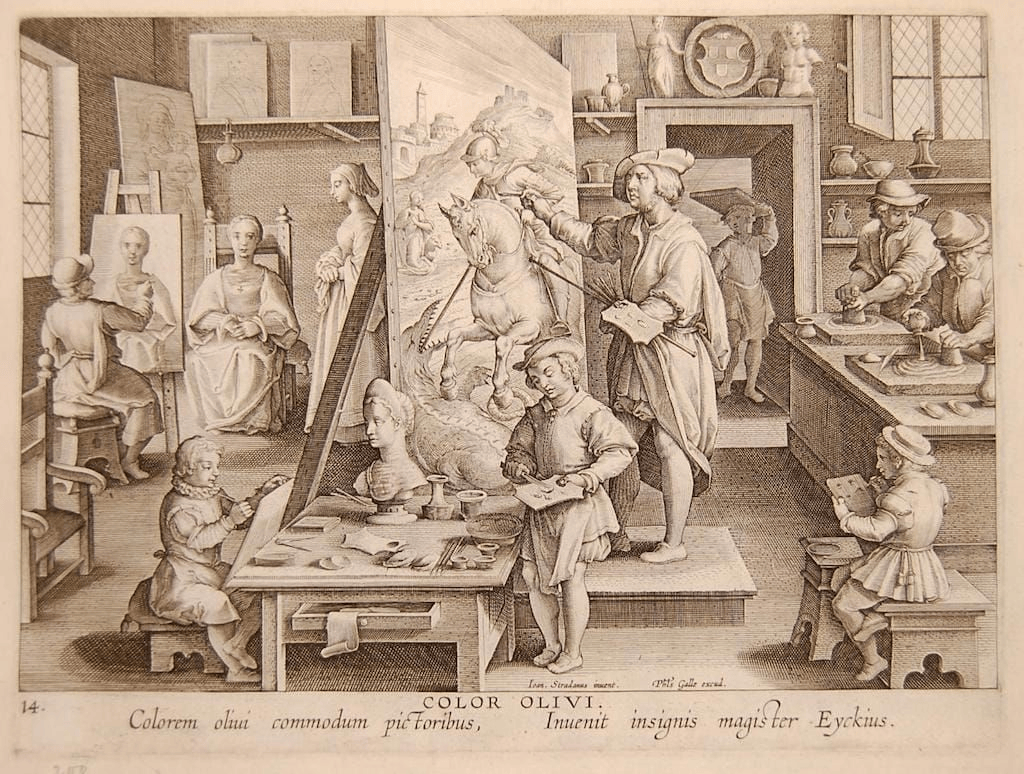
Most old-masters did not paint their own paintings: they managed large ateliers, provided sketches and ideas, and left the actual realisation to craftspeople. Similarly, and very openly, Kent Monkman has developed an atelier process whereby his art is collectively produced.
Even Marcel Proust worked closely with assistants who read, kept track-of, rearranged and sometimes re-wrote the snippets scattered across his note books. Indeed, he sometimes dictated to them, whilst they did the writing1.
So, as a society, we are very familiar with artists not actually producing (i.e. directly, with their own hands or exact words) every aspect and detail of their work. This has not caused any problem, and few people deny Monkman’s, da Vinci’s or Prousts’ creativity or authorship.
To what extent is receiving help from AI fundamentally different?
Should a story be ignored because we don’t approve of the storyteller?
Orélien should have been more forthcoming: just as one expects writers to be clear (at least with their publishers) about whether they used a ghost-writer, and just as artists such as Monkman discuss their creative process, so Orélien should have been clear (at least with his publisher) about how he used AI.
Maybe he should have been asked, rather than gleefully outed by M.Fitoussi.
Admitting to the use of AI does not imply that C’était ça ou mourir does not deserve to be published or read. Nor would it imply that Thélyson Orélien is not the author.
Circling the wagons to protect elite storytelling?
AI has allowed a voice that may not otherwise have been heard to tell a compelling story.
For all my ambivalence about AI, this could be one of its benefits : a language model improving authors’ writing seems the perfect use for such machines. AI won’t implant sane ideas into its priesthood, provide insights into the human condition, nor wash the dishes, but LLMs have their uses, and this could be one of them.
Still, the socio-cultural elites’ monopoly on story-telling is in danger : it is now time to circle the wagons!
- I have just finished a fascinating biography of Proust by Jean-Yves Tadié in which the process of writing A la Recherche du Temps Perdu is described in detail. This information comes from the second volume. ↩︎

