I was lucky enough to attend a fascinating session at the July 2026 CIP conference1 where the use of AI by cities (and, specifically, by planners) was discussed by people working in the field.
Below, I set out some key take-aways.
My overall take-away is that AI is overhyped : there is strong pressure from tech-multinationals, developers, technophiles and FOMO politicians for AI to be implemented quickly and across the board.
In reality AI remains a tool, useful in some circumstances, but rather limited in others.
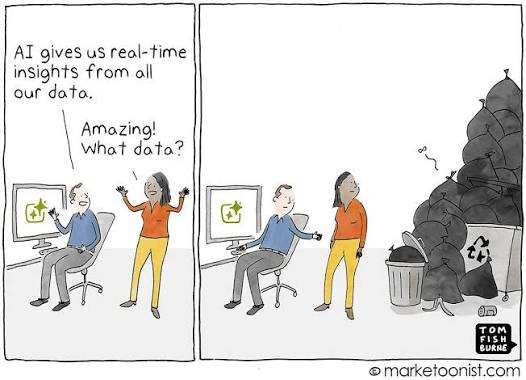
1- Garbage in – Garbage out
This old adage remains true for AI. Unless data used to train AI (or upon which AI is set to work) are carefully selected, approriate to the task, and error-free, AI’s output will be questionable at best, and, at worst, biased and full of errors.
The careful preparation of data, and the weeding out of irrelevant, biased, or out-of-date information, must be overseen by professionals with an understanding of what AI is being used for.
2- What is the problem to which AI is being applied, and is AI the right tool?
AI is a tool. As for all tools, the first step is understanding the question (or the problem) and assessing what the best tool is. Sometimes, once a question has been defined and circumscribed, AI–running on well-curated data– can indeed simplify or accelerate a task.
But sometimes AI is wholly inappropriate, can be over-kill, or could produce black-box solutions whose connection with the problem at hand is unclear.
So, articulating clear questions and choosing the right tool for the job are key professional interventions.
3- Assessment of output: the human eye and professional liability
Assuming a well-defined question, assuming that AI is appropriate for the task, and assuming error- and bias- free data, AI may be useful. However, AI is essentially a black-box: even with all preliminary precautions, its output needs validation.
There are at least two reasons for validating AI output.
First, AI has no understanding of ethics, grey zones, or of the material, embodied, emotional, world. Thus, any ‘solution’ that touches upon politics, culture, community sentiment, or physical design requires human oversight to avoid basic errors (basic, that is, to the human eye) and hallucinations. Even for simpler, closed, tasks (such as producing code or summarising documents) some degree of external–i.e. human–validation is necessary to ensure that results translate well from the artificial world of statistics and LLMs to the real world of cities and people.
Second, cities (i.e. their departments, their elected officials, as well as consultants and employees – such as urban planners) are responsible for reports they produce and decisions they make. Urban planners, in particular, are professionally responsible–and liable–for documents and designs they sign-off on.
Expert validation of AI output is not simply to avoid errors or hallucinations, nor only to ensure compatibility with the real world. It is also a matter of liability.
Thus, users of AI need to be experts, and should have the ability to assess AI output, however complex it may be and however opaque the underlying AI mechanisms.
4- Ethics, confidentiality and data leaks
As soon as anything is uploaded to an AI system (unless it is a completely closed and off-line system) it has become potential fodder for AI learning. Its confidentiality is compromised : whatever the assurances of AI suppliers, the legal framework surrounding uploaded data and queries is murky.
Furthermore, data (whether stored or simply transiting through fiber-optics) are subject to territorial jurisdiction. So, should a province, state or nation through which data are transiting decide to appropriate confidential data for themselves, nothing can be done about it.
Thus, if AI is used for confidential work (whether this be draft white-papers, personalised data, private emails…) input information and data may not remain confidential. This is especially problematic when private data or tentative policy recommendations are run through AI.
5- Environmental impacts, global warming and climate change
Internet searches that use AI (now standard) burn about 10 times more energy than ‘classic’ searches. AI data centres are driving up local and national energy costs, use huge amounts of water, and are throwing off heat into our fast-warming environment.
“According to new projections published by Lawrence Berkeley National Laboratory in December, by 2028 more than half of the electricity going to data centers will be used for AI. At that point, AI alone could consume as much electricity annually as 22% of all US households.” (MIT technology review, May 2025)
Locally, data centres are scarring landscapes, polluting the air, emitting constant sound and disrupting wildlife.
For cities (and individuals) concerned about climate change, wildlife, water shortages and lowering their carbon footprint, this should be factored in.
6- Financial cost of AI – the danger of bait and switch
Until very recently AI was being rolled out at low cost to users. This is a classic bait strategy –i.e. one that attracts new users making them reliant upon (cheap) AI. Once AI has become an essential component of multiple workflow processes, then the cost of tokens3 will rise and users–e.g. cities and urban planning consultants– will have no option but to pay.
Planners and cities should be wary of the current affordability of AI. This affordability will probably not last forever. Once the cost has risen, those who have relied upon it too much may find themselves incapable of undertaking the tasks that they delegate to AI.
7- Distinguishing between tasks and processes : elusive ‘efficiency‘
AI — subject to all the provisos set out above — can accelerate specific tasks (such as programming, summarising texts and data, certain rendering operations…).
Yet this will not necessarily lead to faster or more efficient processes. For example, in the context of public consultations AI may help produce thirty different versions of a presentation (whereas, without AI, maybe two versions would be prepared). Time will then be taken to discuss and choose the ‘best’ one. This may consume much of the time ‘saved’.
Even if the presentation (the task) is prepared faster, the consultation itself (the process) will not have been much accelerated, since the essence of consultation is not the presentation itself, but discussions, community outreach and feedback that it ellicits. After this, it needs to be fed back into policy thinking and formulation.
The acceleration of certain specific planning-related tasks may have no impact on the time it takes to implement planning-related processes.
To conclude
These are my takeaways from the session. What I find fascinating is that many of the concerns I was aware of in an abstract way were concretely presented and discussed by the panelists (named below in footnote 1, and whom I heartily thank).
I left there feeling that professional planners– and many other professionals–will remain important to business and government. Certain clerical tasks may become obsolete, but, even for these, empathetic interaction with people and genuine problem-solving will remain outside the realm of AI’s capabilities, which will tend towards average, concensual, responses.
If AI does become all-pervasive, the tasks undertaken by planners may change, but there are plenty of areas where their expertise will remain necessary.
But, listening to the professionals on the panel (in conjunction with my own readings), I have doubts about whether AI will become all-pervasive. Whilst there is little doubt that for well-defined questions relying on well-curated bodies of data LLMs are extremely powerful, their wider utility (except as vectors to enhance the power of Silicon Valley tech : privatising thought and analysis is potentially profitable) remains dubious.
AI’s environmental impact is potentially catastrophic. As one panelist concluded, many organizations are currently articulating a schizophrenic discourse, both rushing towards AI and expressing concern about heat-waves, fossil fuels and other environmental issues.
***
- ‘Utilisation de l’Intelligence Artificielle au sein des villes québécoises : opportunités et défis’. Charlotte Pivot (Ville de Montréal), Francis lepage (IVEO), Maxime Lamothe (Polytechnique, Montréal), Geneviève Baril (Cité-ID Living Lab) – 8th July 2026, CIP Fusion 2026 conference, Montréal
- Fear of missing out
- A token is a ‘unit’ of AI computation.

