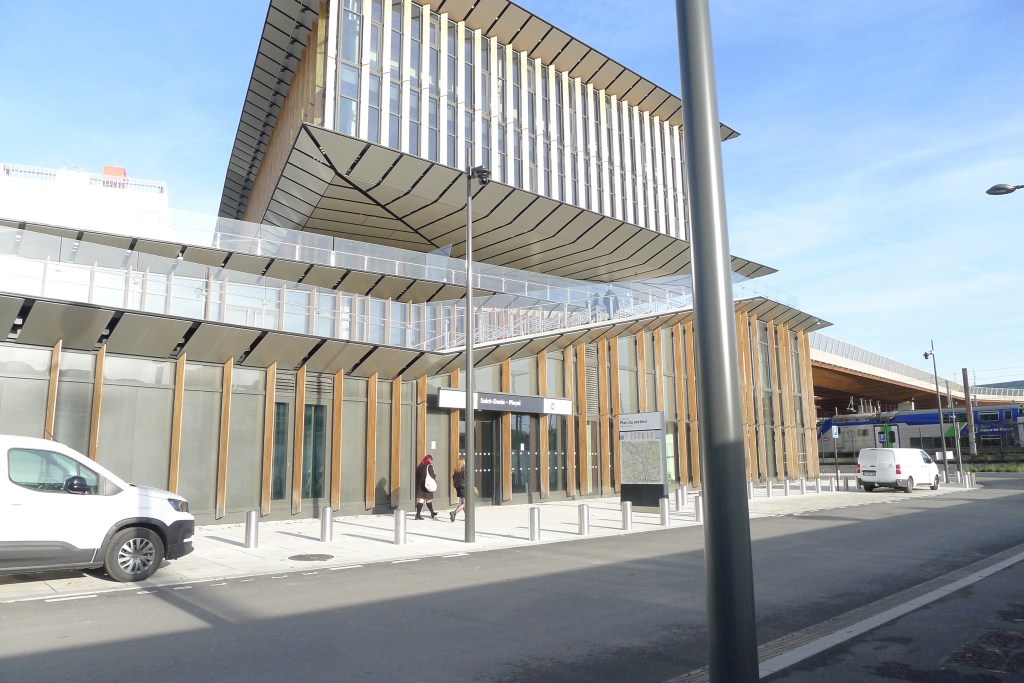
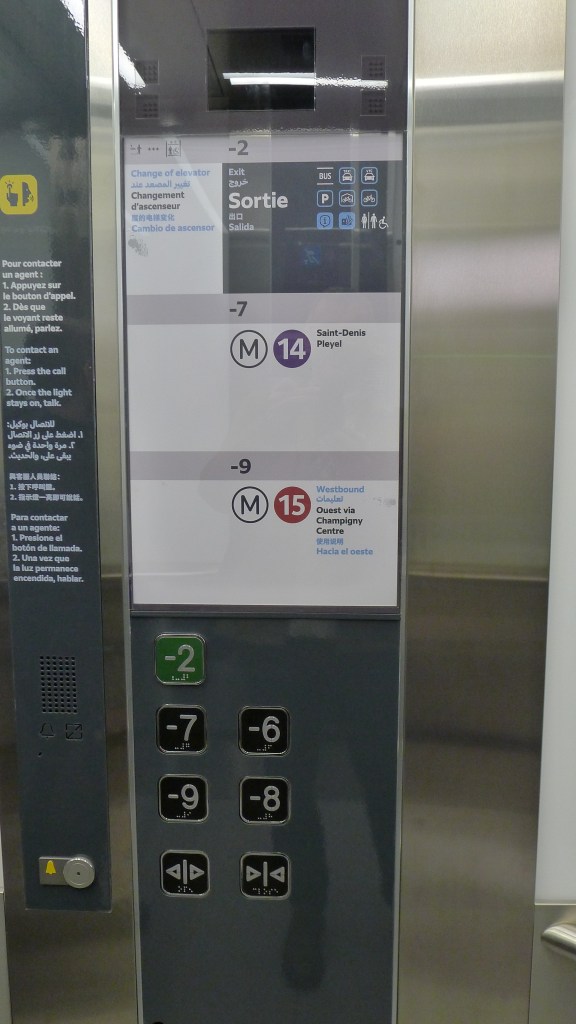
I was lucky enough to visit the new St.Denis-Pleyel metro station a few weeks ago. It is open, so anyone in Paris who does not feel like queuing for Notre-Dame can get there in a few minutes from central Paris, on line 14.
St.Denis-Pleyel is a key connecting station for the Grand Paris Express, 200km of new – mainly tunneled – metro lines circling Paris and connecting its suburbs.
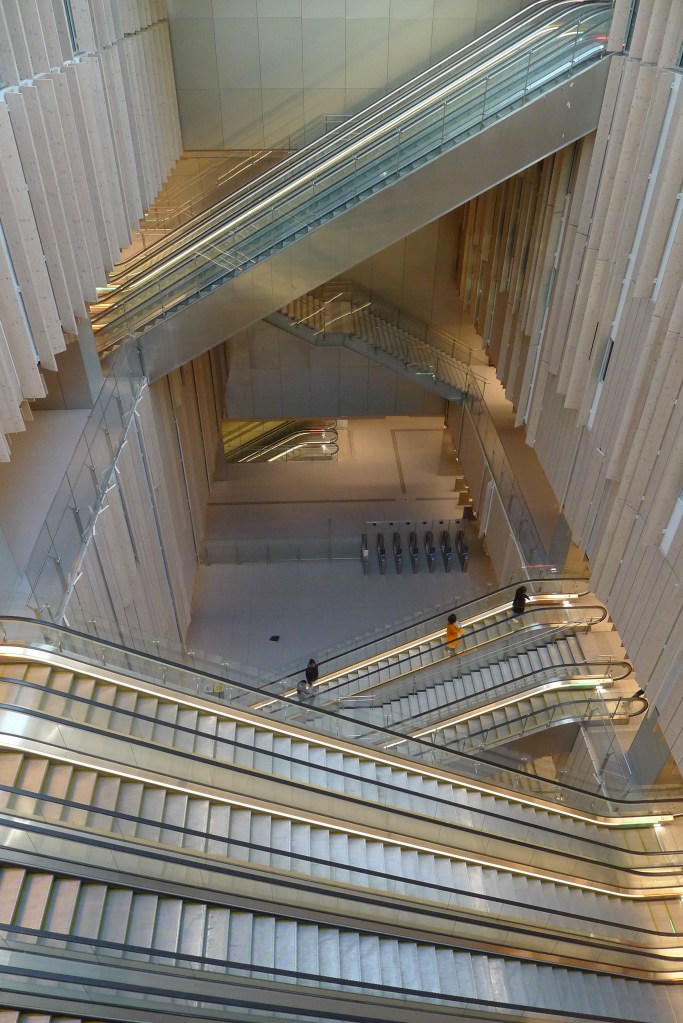
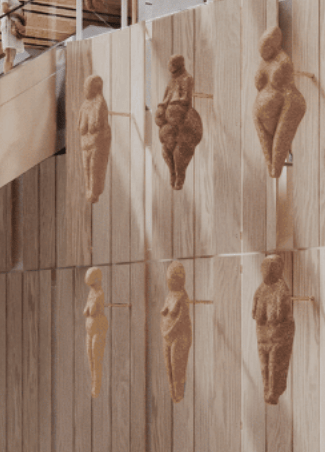
Below, I share a few photos. I was rather awestruck by the seven-storey atrium, dug down towards the rail lines. The atrium is panneled with wood. Interesting artwork has been commissioned for platform signage (and for atrium – it was being installed during my visit). Even the foot/cycle bridge outside, which spans about 40 rail tracks (the lines, and sidelines, for trains leaving Gare du Nord) is a cut above basic steel-framed structures often thrown up as utilitarian after-thoughts…
This is what serious investment in public transport looks like. It is not merely utilitarian, but catches the imagination.
One hopes that, in the short term, the finances work: all this is expensive.
But whatever the current costs, in the long term this infrastructure will shape the city for the next few centuries, just as the Paris metro, built in the early 1900s, has since been shaping – and continues to shape – Paris.



 Richard Shearmur